Transient Buckeye Intro: We're coming off a weekend where the vast majority of the conference treated themselves to cupcakes (or in some cases nearly choked on them--looking at you, Trojans!). I suspect that means that movement in this week's Power Poll is going to be rather limited. But that is not the case with the subject of this week's poll, which is all about moving people from one altitude to another. This week's submission is brought to us by @LegitmatelyBronchial, who is going to teach you more about the subject of chairlifts and aerial trams than you ever thought you needed to know. Let's all visit a world in which you want to make damn sure your cable bill was paid. Take it away, LB!
Greetings, Off Tackle Repudlians.
I found my way to this community via a Google search after ESPN discontinued its B1G blog in what would prove to be the first of many unimpeachable decisions by the network. I’ve always enjoyed the power polls and, in particular, the entries on tornado sirens and vintage diesel locomotives (shoutout to @Thumpasaurus) inspired in me a firm, unbending commitment (if, maybe, I ever got around to it) to try my hand at mechanical esoterica mated to the teams we love to hate.
Which brings us to: Chairlifts, Aerial Tramways, and some of the things in between.
Now that the preamble that you didn’t read is out of the way, let’s get down to business.
#1 Indiana (3-0, 0-0): Lone Peak Tram, Big Sky, MT
Last Week: 1 High: 1 Low: 18 First-Place Votes: 11 Last-Place Votes: 1
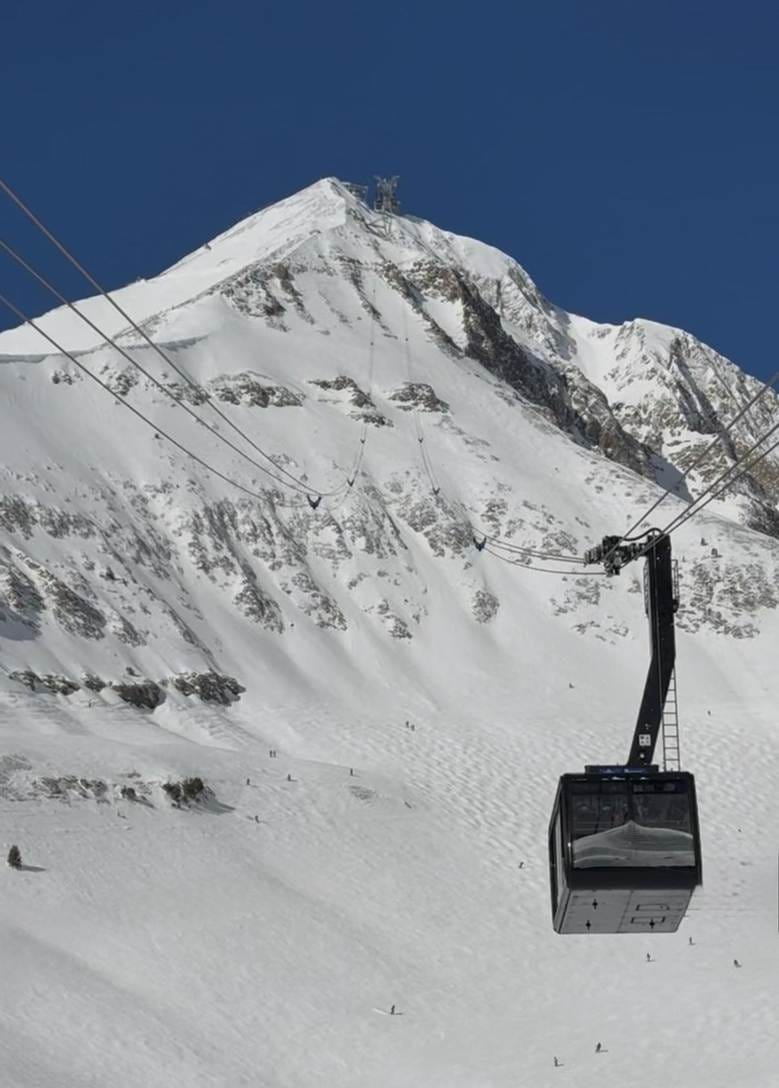
Jigback aerial trams like Lone Peak go where other lifts can’t, ascending the steepest, windiest, most rugged terrain, traversing thousands of vertical feet to deposit passengers at the top of a far-flung summit. The inertia provided by the heft of the passenger cabins (carriers), along with the strength and stability derived from two thick, steel track ropes supporting each cabin while a third rope provides traction, deliver superior wind resistance and the tensile strength to traverse unforgiving ground with minimal need for support towers.
Much like a passenger on these machines, Indiana now finds itself, improbably, defending its position at the pinnacle of the college football universe. Getting there required the right combination of luck, personnel, and money. The latter is fitting, since units like the LPT carry the biggest price tags in the lift world. We’re talking about Mellencamp money.
Early returns for the Hoosiers are promising, and it will be interesting to see how the program handles having a massive target on its back for an entire season.
#2 Ohio State (2-1, 0-0): Peak 2 Peak Gondola, Whistler Blackcomb, BC
Last Week: 3 High: 1 Low: 5 FPV: 2 LPV: 0
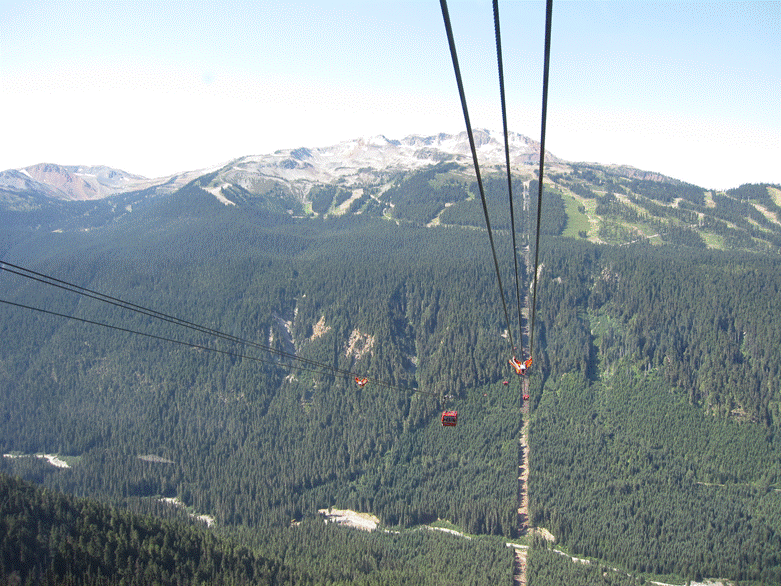
The stats for this one are staggering. Nearly a 2-mile unsupported span that takes passengers an eye-watering 1,430 feet above the valley floor. To accomplish this, 3S lifts (from the German 3 seil, or 3 rope) essentially combine gondolas and aerial trams, with two track ropes supporting the larger than usual gondola cabins, and a continuous haul rope to pull them along. Unlike jigback trams, which operate with two cabins alternating between forward and reverse, carriers on a 3S system operate in a circular fashion.
The Buckeyes are unparalleled in recent B1G history when it comes to racking up big stats in terms of wins, national championships, and more. But, the early loss to Texas has fans wondering if this will be a season that adds or detracts from their recent pedigree.
#3 Penn State (3-0, 0-0): Gold Coast Funitel, Palisades Tahoe, CA
Last Week: 4 High: 2 Low: 4 FPV: 0 LPV: 0
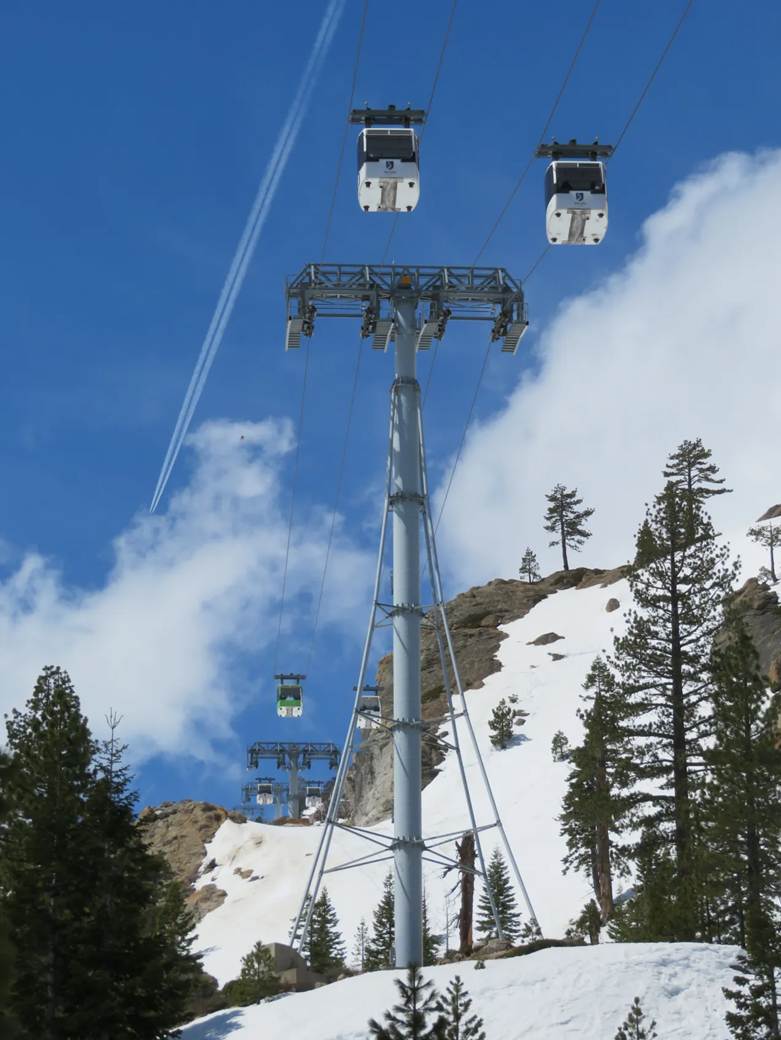
Wind resistance is the big selling point for funitel lifts. Each cabin on this example has four detachable grips, two per side, clamped to widely spaced parallel haul ropes, providing excellent stability.
The Nits achieved above Ferentzian stability under James Franklin, averaging nine wins per season during his tenure. Will Matt Campbell be able to meet or exceed that record? Early results are inconclusive.
#4 Iowa (3-0, 0-0): Center-Pole Riblet Doubles
Last Week: 5 High: 2 Low: 7 FPV: 0 LPV: 0
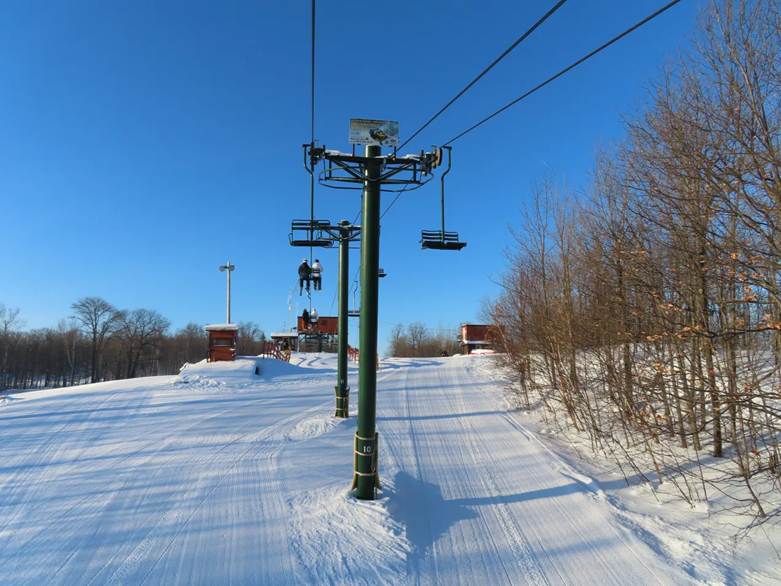
These lifts played a defining role in the growth of the American ski industry from the 1950s through 1980s. Relatively simple and cheap, those of us who built, relocated, and maintained them had the good fortune to land what is essentially a paid gig playing with a massive erector set for grownups.
Alas, the ubiquitous nature of these lifts meant that a decent number ended up serving beginner terrain. This poses the following problematic scenario:
● Children ride beginner lifts
● The preferred method for an adult to help a child onto a beginner lift is to toss them onto the seat, much as one would swing a sack of potatoes into a shopping cart
● On this particular design, there is a stout metal pole preventing you from executing this maneuver with grace, aplomb, or even panache.
● This can sometimes result in a child dangling a few feet off the ground, frequently as said child’s parent emits shrieks of appallment and horror as the lift operator mashes the stop button.
If the smooth matriculation of skiers up a slope is analogous to a football offense moving efficiently down the field, then this, the opposite of that, is a good proxy for Iowa’s offense, which also has been known to elicit screams of dismay for all those subjected to it. It remains an open question as to whether year three of the Tim Lester regime can break this mold.
#5 USC (4-0, 1-0): The Doppelmayr D-Line Chairlift
Last Week: 2 High: 2 Low: 11 FPV: 0 LPV: 0
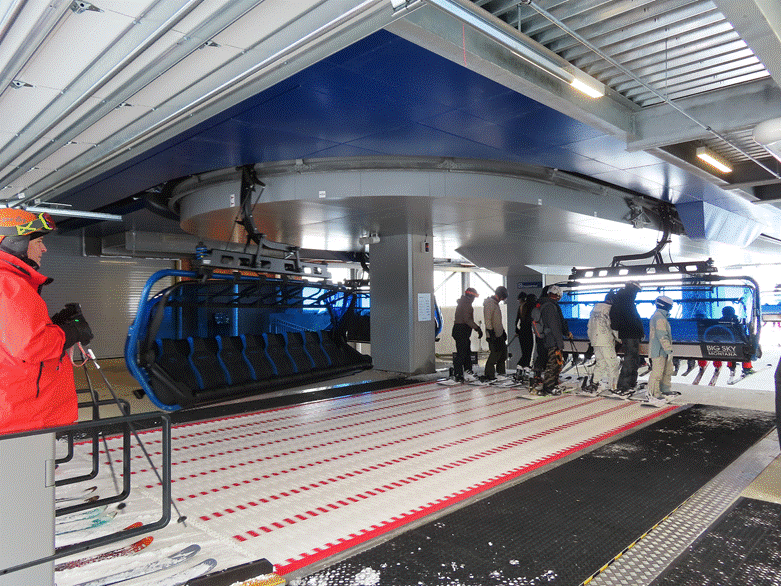
Riding a D-Line (stop it) is akin to floating through the air on a fine leather sofa. They seat six or eight people per chair (they’re also available with gondola cabins) and can boast upholstered, heated seats with bubble canopies to shelter passengers from wind and precipitation. To someone who grew up riding on lifts with thinly padded metal slat benches fully exposed to the elements (see Sundown, below), the first time on one of these lifts seems surreal.
Like aerial trams, D-Lines tend to be found at upper echelon resorts where wealth and power accumulate. *Cough* Los Angeles *cough*
One could make the argument that the D-Line is the culmination of a certain softness encroaching on skiing. There’s a reason that an end-of-the-day binge drinking session came to be associated with the sport: Participation used to involve a full day of exposure to the elements. Many of us in the traditional conference footprint consider USC to be a soft program, big on flash but, at least so far in its tenure as a member of the B1G, a bit light on toughness (and fans in the stands).
#6 Nebraska (3-0, 0-0): The Borvig Double Quad, Trollhaugen, WI (Uncompleted)
Last Week: 6 High: 3 Low: 9 FPV: 0 LPV: 0
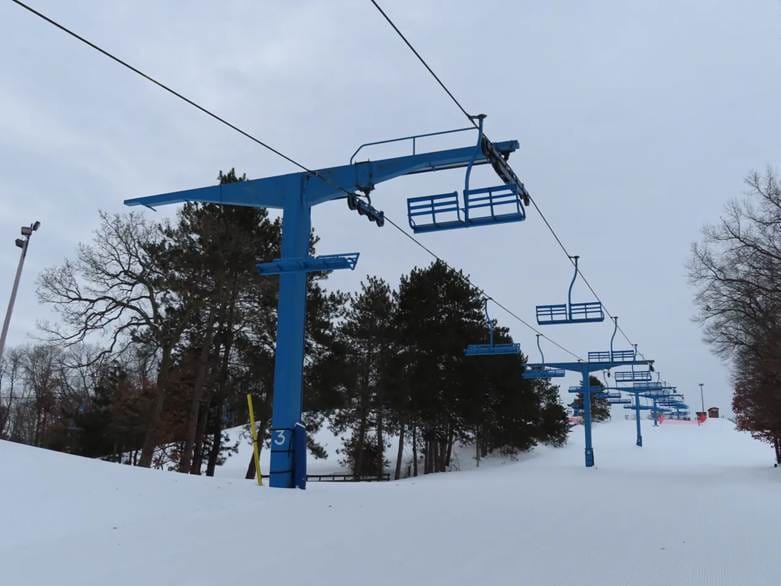
Before the advent of high speed detachables and high capacity carriers, more lifts were the answer to a shortage of uphill capacity. Borvig came up with a novel solution: run two lifts on the same set of towers, effectively doubling capacity.
For reasons unbeknownst to even the author, this setup is somehow reminiscent of the run heavy, grinding teams of the Tom Osborne era.
Are the Huskers on the verge of emerging from the doldrums of the Riley-Frost era? It’s probably too soon to say, but they at least look, dare I say, competent so far.
#7 UCLA (3-0, 1-0): Mueller Lifts
Last Week: 7 High: 6 Low: 10 FPV: 0 LPV: 0
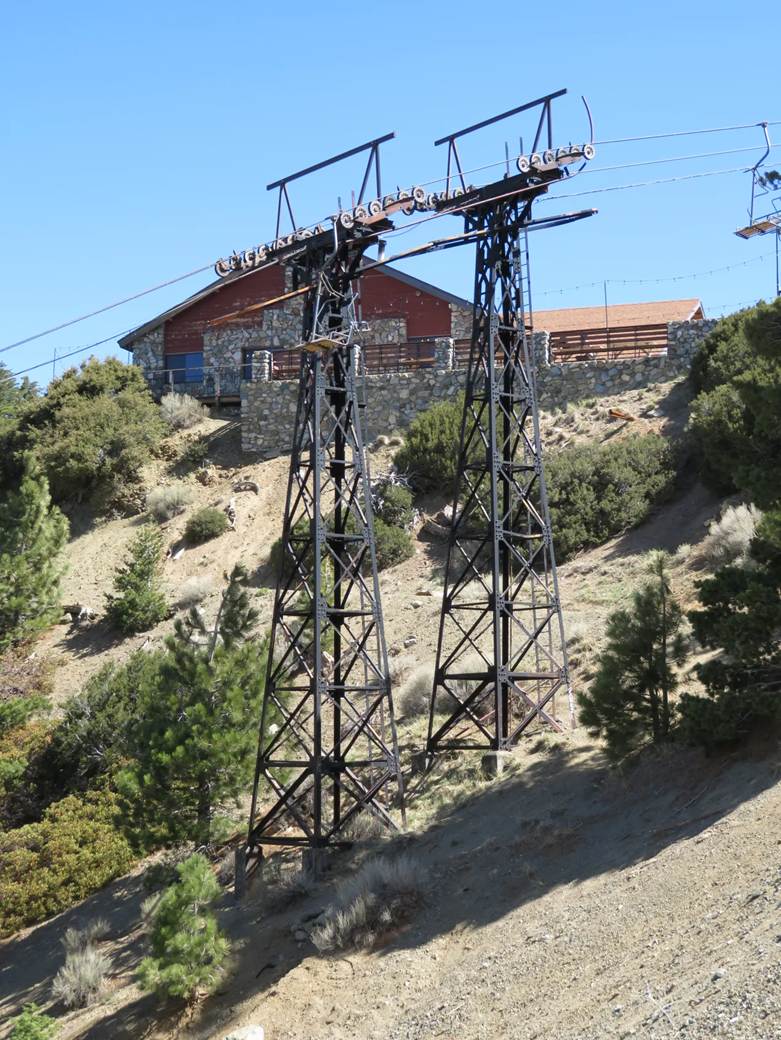
Mueller lifts are notable for the distinctive lattice design used for their support towers. More common in the early days of lift construction when many manufacturers drew from mining tramways for design inspiration, these structures eventually gave way to the single tube design common today. And for good reason, as lattice towers are needlessly complex and overbuilt for the task. But they look pretty cool.
What does this have to do with the 2026 Bruins? Not a damn thing. With many unique and interesting left designs in the world, it gets a bit difficult to find a fit for some of the newer teams in the conference that occupy the thoroughly forgettable middle part of these rankings.
Personal anecdote to the rescue. League expansion has enabled those of us on the West Coast to watch our beloved teams shit the bed in new, exotic locales. I’m looking at you, 2024 Iowa vs. UCLA. And yes, I realize there isn’t anything new or exotic about Iowa playing like ass in Pasadena, but there is something new and exotic about watching Iowa lose to a sub-mediocre UCLA team in conference play at the Rose Bowl. Oh, and I got to ride a Mueler lift at Mt. Baldy on that very same trip. Huzzah!
While there is some early cause for optimism in Westwood, whether the 2026 iteration of UCLA will finish 5-7 or closer the (checks Google) 3-9 mark of last season remains to be seen.
#8 Northwestern (2-0, 0-0): Aerial Gondola, Sterling Vineyards, CA
Last Week: 13 High: 5 Low: 13 FPV: 0 LPV: 0
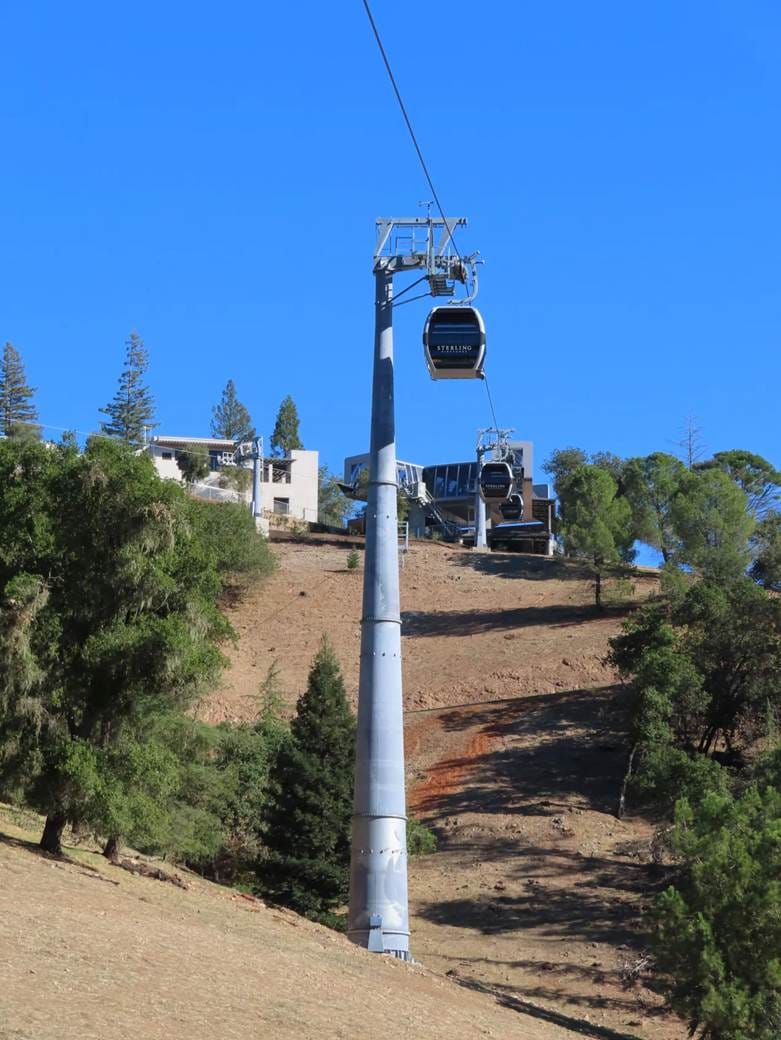
Obviously the nerds get a lift that deposits you into a bougie activity like wine and cheese tastings in Napa. That part is self explanatory.
But the connections don’t end there. The previous lift installed here–a nifty retro installation by Hall–was rendered inoperable by the Glass Fire in 2020. This, of course, has zero parallels to a certain coach burning down a certain program before being sent packing in ignominy.
#9 Oregon (3-0, 0-0): 1980s Fixed Grip Yans
Last Week: 9 High: 3 Low: 18 FPV: 0 LPV: 1
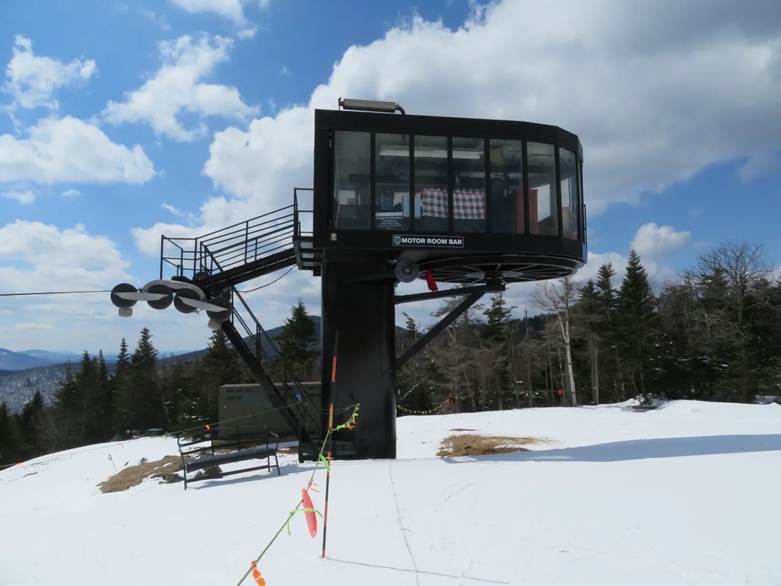
Yan, also known as Lift Engineering, was one of the first lift manufacturers to incorporate a pronounced aesthetic flair to its designs. Note the sleek, “hubcap” style sheaves and sleek sheave beams carrying them in the example above, along with the glass enclosed motor room.
Unfortunately, ‘ol Janek (Jan) Kunczynski and his boys may have been a little too attentive to looks, as some of these flashy components could be prone to failure. That said, many fixed grip Yans from this era performed reliably for decades, with some still in operation today.
Oregon also seems to be a case of style over substance this year, but perhaps they can turn it around if, I don’t know, their quarterback stops making it so a kindergartener can guess what offensive play they are going to run with perfect accuracy.
#10 Michigan (3-0, 0-0): High Speed Detachables
Last Week: 8 High: 5 Low: 17 FPV: 0 LPV: 0
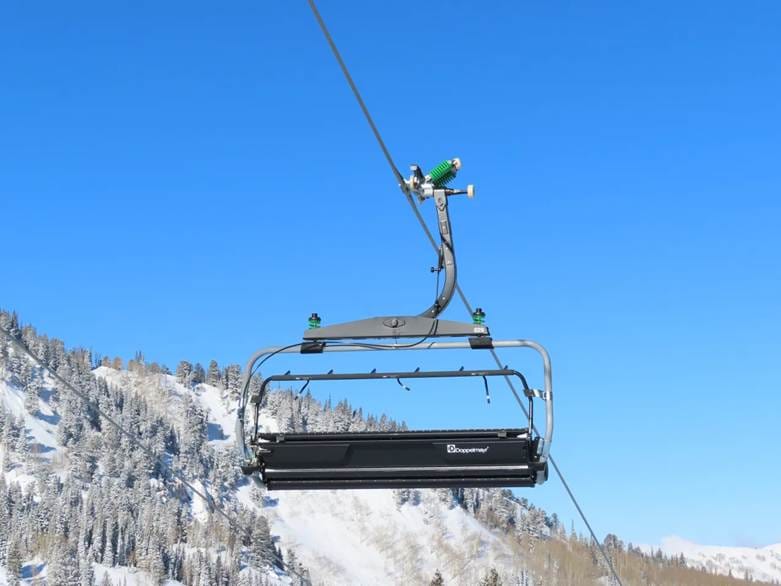
High speed detachables revolutionized the ski industry. Previously, line speeds were limited by how fast passengers could safely load and unload, usually between 400-500 feet per minute (fpm). These lifts changed the game through ingenious engineering. Rather than using grips that are fixed to the haul rope, those on a detachable lift use the clamping force of high tension springs to hold the grip to the line. When the chairs enter the terminals, the springs are depressed, releasing the grip and transferring the carrier to a conveyor system that decelerates and transports it through the loading/unloading area at speeds of around 200 fpm, slower than a fixed grip lift. Then, as the carrier departs the terminal, it is accelerated back to the line speed, usually around 1,000 fpm, the springs are released, and the grip is reclamped to the haul rope. This cuts time spent riding the lift roughly in half while also allowing for safer loading and unloading.
Less time riding the lift means more time playing in the snow. In a similar vein, Michigan figured out how to tear the fabric of space time, inserting an extra second into the cosmos and preserving a so-far undefeated season in the process.
#11 Washington (3-0, 0-0): Martis Camp Express, Northstar, CA
Last Week: 10 High: 8 Low: 14 FPV: 0 LPV: 0
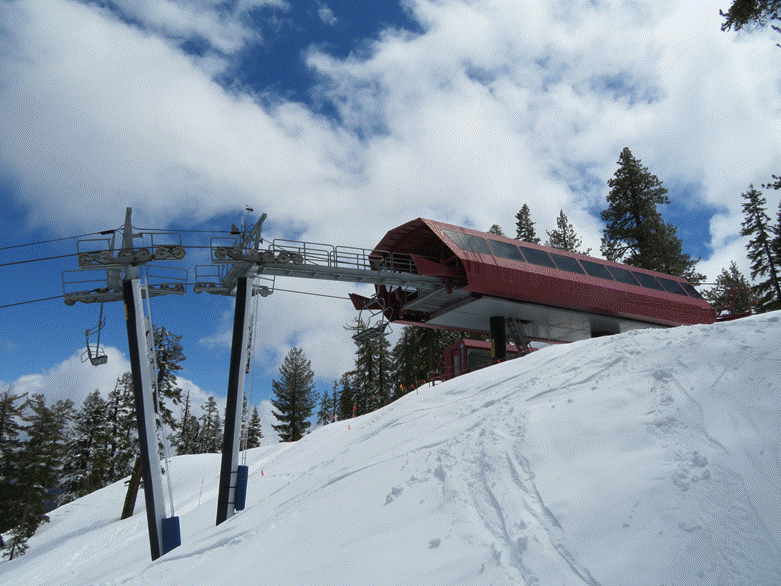
Time for a brief lesson in thermodynamics from a thoroughly unqualified professor. Sun hitting a metal chairlift tower can cause uneven heating, in turn causing the side in direct sunlight to expand more than the shaded side. This can cause sideways deflection of the sheaves (the wheels that support or compress the haul rope at the tower). These small changes in alignment are particularly problematic on breakover towers (the towers just before the top terminal), where small changes in sheave alignment can be especially consequential. The solution here was to paint the north facing side black and the south facing side white. The white side reflects more thermal radiation, thereby reducing uneven heating of the tower.
Ditto what I said about UCLA. But hey, these towers are white and black, and so are huskies. Said animals also have a reputation for obstinance, much like the 2026 iteration of the UW Huskies are obstinately refusing to perform at the level expected thus far in the season.
#12 Illinois (2-1, 0-0): Borvig Double Double, Snowstar, IL
Last Week: 11 High: 8 Low: 17 FPV: 0 LPV: 0
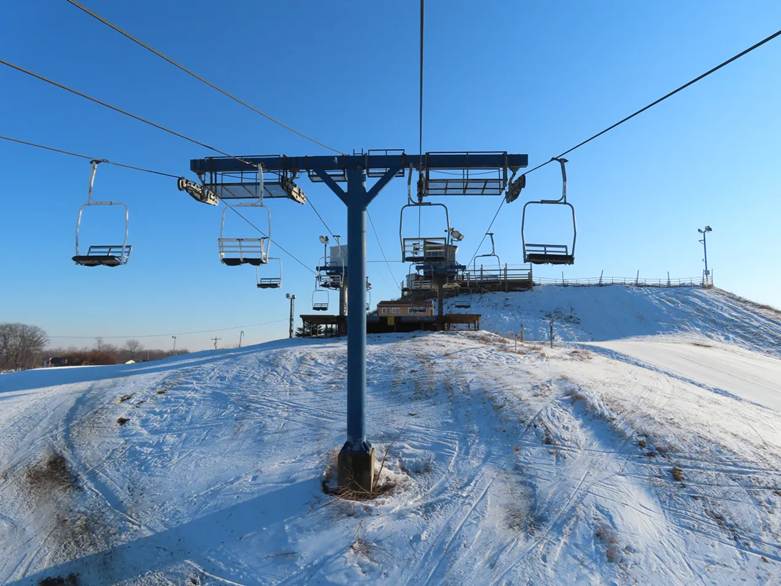
Pretty nifty idea here: You get the uphill capacity of two lifts for the price of one set of towers. Much like Illinois, these were perfectly decent lifts that never really took off. And, much like Bert, this particular lift came to Illinois from SEC country (Ski Butler in Kentucky).
#13 Minnesota (2-1, 0-0): Single Chair, Mad River Glen, VT
Last Week: 16 High: 11 Low: 16 FPV: 0 LPV: 0
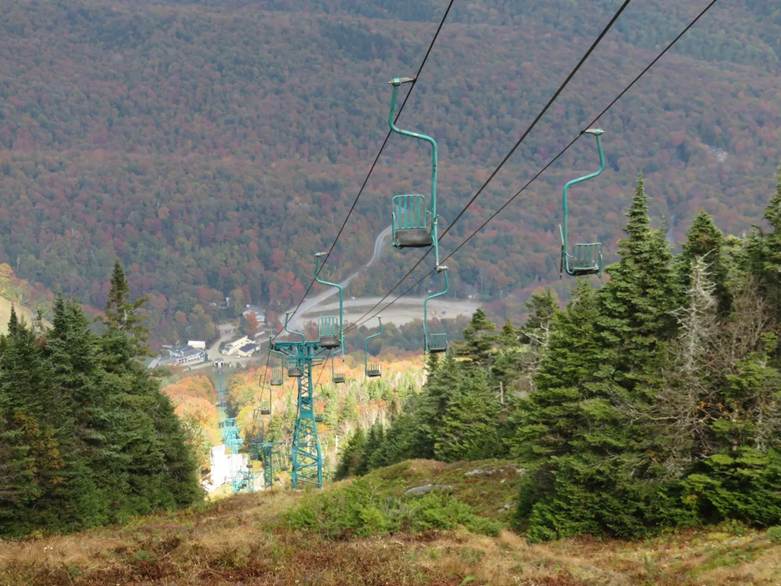
This classic, one of only two single lifts still operating in North America, was built by American Steel and Wire Company and opened in 1948, right around the last time the Gophers fielded a nationally relevant football team.
It underwent an extensive rebuild by Doppelmayr in 2007. Minnesota also underwent an extensive rebuild in 2007 as well by hiring Tim Brewster. One of these projects was more successful than the other, see if you can figure out which one it was.
#14 Michigan State (2-1, 0-0): Relocated Lifts
Last Week: 14 High: 11 Low: 16 FPV: 0 LPV: 0
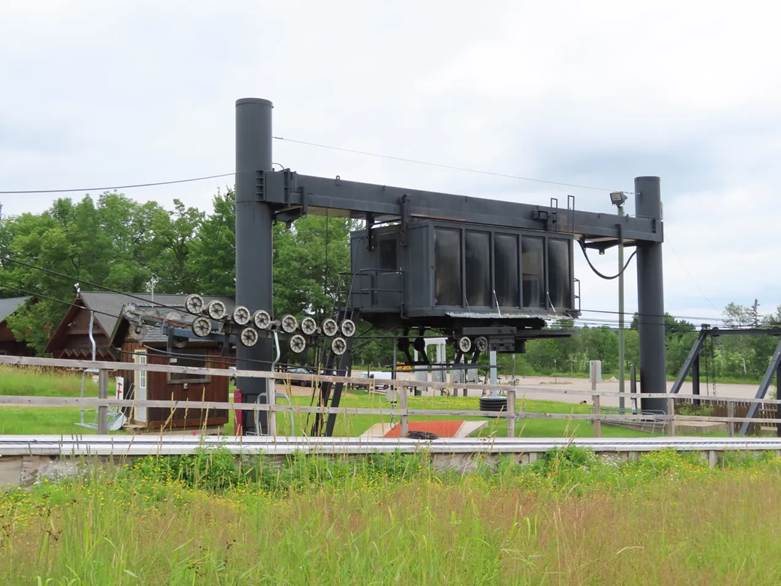
Believe it or not, used chairlifts are a thing–and probably more common than you realize. Hard numbers are difficult to come by, but safe to say the number of relocated, re-engineered lifts numbers in the hundreds in North America.
Coaching retreads are a thing too, and Michigan State settled on a doozy for this season. Early results are not promising.
#15 Wisconsin (2-1, 0-0): The Borvigs of Sundown Mountain Resort, Dubuque, IA
Last Week: 15 High: 10 Low: 16 FPV: 0 LPV: 0
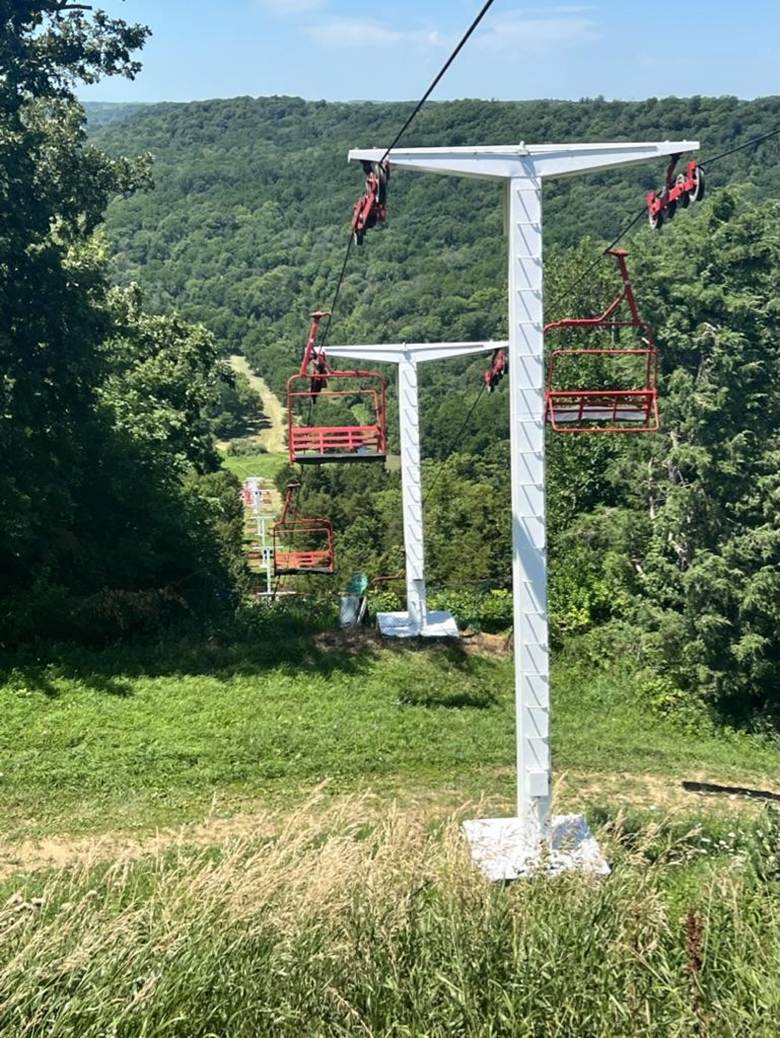

Colors aren’t the only reason for this pick, though. Wisconsin could’ve embiggened its program by hiring a perfectly cromulent coach in Jim Leonhard. Instead, you went for a home run hire and it's turned out to be anything but. You made a dumb decision, and as a penalty I’m assigning you a lift across the river in the territory of a hated border rival. Now go wallow through another 4-8 season and think about what you’ve done.
#16 Maryland (2-1, 0-0): The Fall Scenic Chairlift Ride
Last Week: 12 High: 8 Low: 16 FPV: 0 LPV: 0
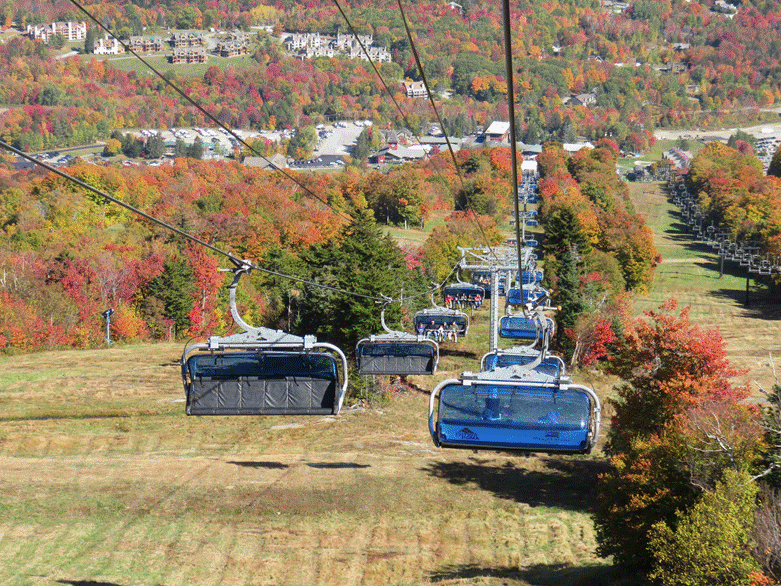
The fall scenic chairlift ride is a staple at many ski resorts. It’s a fun little activity that the whole family can enjoy, and it gives the operations team a chance to work out the kinks before the hustle and bustle of the season ramps up.
Unfortunately for the Terps, pleasant autumn invariably gives way to winter of discontent.
#17 Purdue: Hopkins Sky Ride, Assorted Tourist Traps, USA
Last Week: 17 High: 15 Low: 18 FPV: 0 LPV: 3
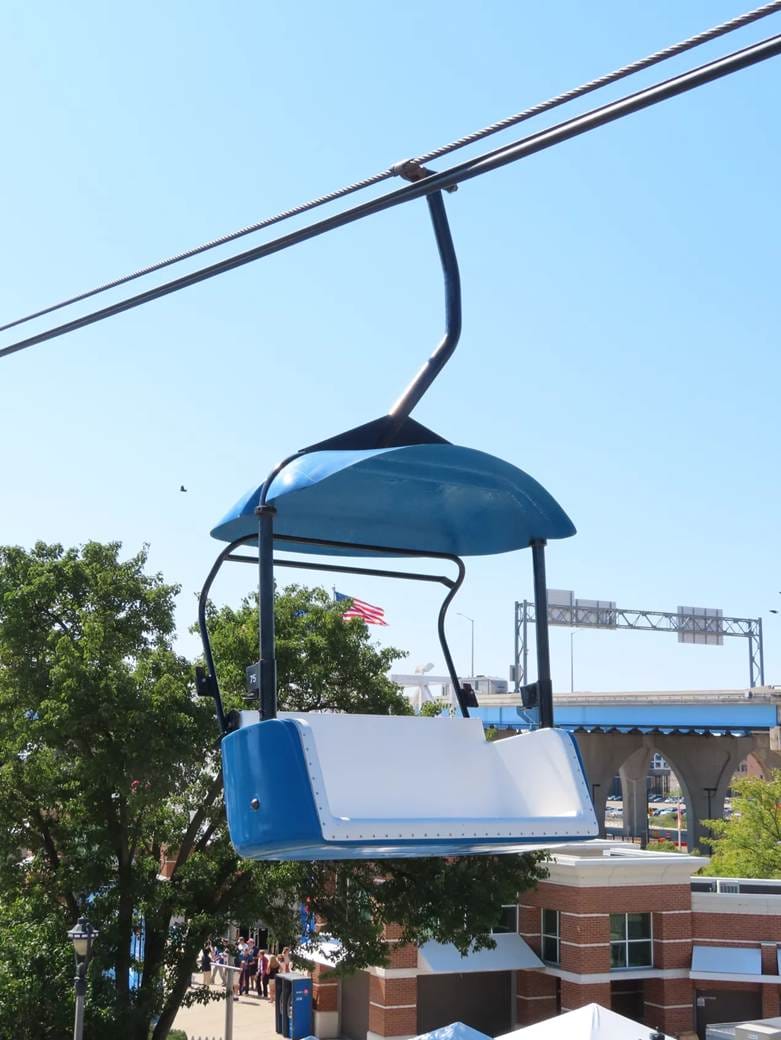
Picture yourself at the state fair, or some comparable festival of compressed humanity. Dewpoints through the roof. BAC trending higher. Heat radiating off the pavement. The crowds. The noise. The Hopkins Sky Ride beckons you to rise above it all, maybe even feel a breeze. Then you realize that 1) you can’t bring your drink on the ride and 2) the carriers are an impermeable molded plastic tub that your sweaty skin sticks to like a naugahyde chair in the rainforest.
In theory the skyride should, like watching a football game, be fun. However, for those watching the Boilermakers this season, the fantasy may wind up looking much different than reality.
#18 Rutgers (0-3, 0-1): Yan Detachables
Last Week: 18 High: 16 Low: 18 FPV: 0 LPV: 8
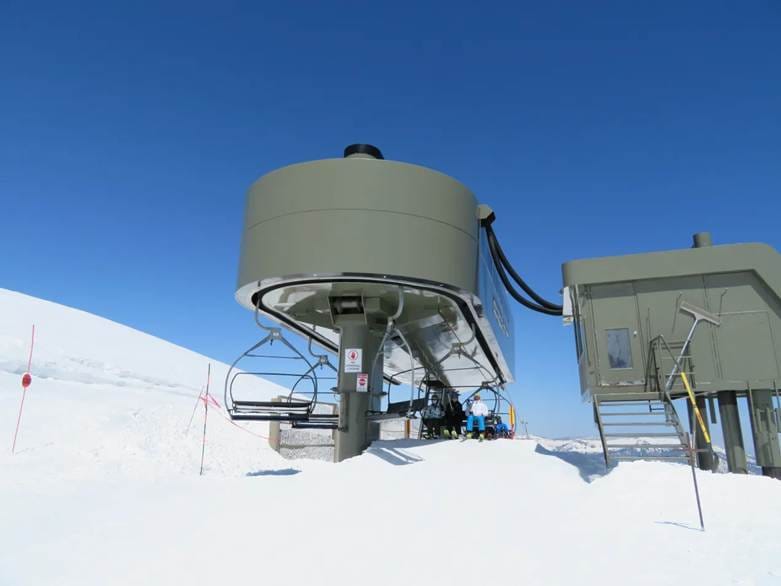
Eager to get in on the booming market for high-speed detachables, Yan designed and installed 31 of these lifts in North America from the mid 1980s to mid 1990s. Yan eschewed the conventional metal coil-spring grip design used by European manufacturers in favor of rubber ‘marshmallow’ springs. The grip design also relied partly on gravity, meaning grip force could decrease when the haul rope bounced or unloaded during events such as an emergency stop. The lifts also suffered from other generalized manufacturing defects and poor build quality. These problems resulted in fatal accidents, one at Sierra at Tahoe in 1993, and one at Whistler in 1995. The general manager at Whistler said they were the “...unwitting recipients of a research and development project." Not great, Bob.
Now, I’m not saying that watching the 2026 Rutgers Scarlet Knights get mogged by UMass is akin to perishing in a terrifying accident begat through incompetence and a disastrously flawed design. Nope. Definitely not saying that.
Special thanks to the proprietor of Liftblog.com for allowing reuse of the photos and serving as the main reference for this “article.”
Transient Buckeye: And that's a wrap! Please give a big shout-out in the comments to @LegitimatelyBronchial for this week's contribution. The sheer breadth of our community's knowledge when it comes to matters of extreme esoterica never ceases to amaze me.
Archiving This Year's Power Polls:
 Transient Buckeye
 Transient Buckeye
 Transient Buckeye